



Pastors.com
Building a Culture of Prayer

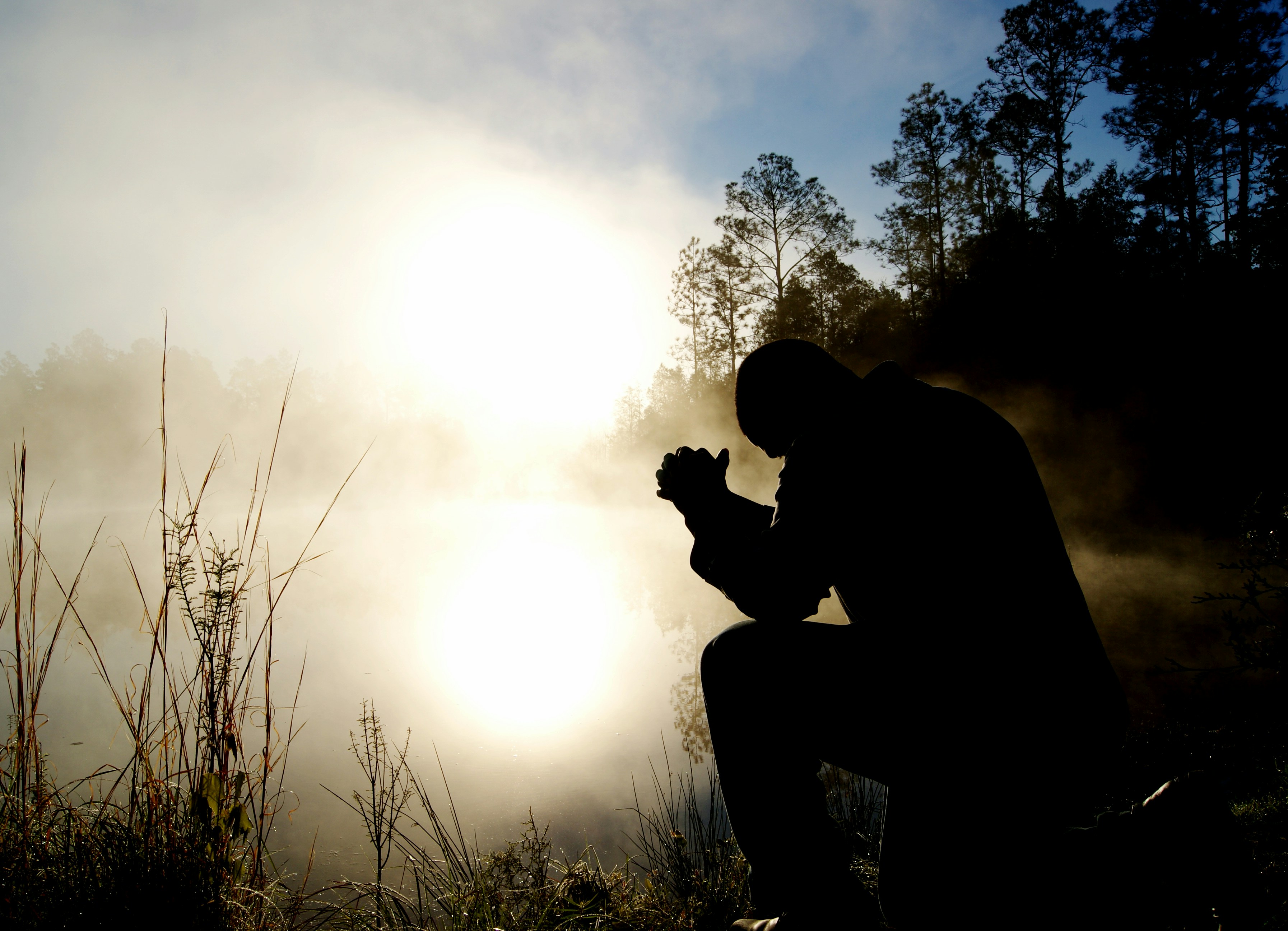
If God has given you a vision for what he wants to do through your church, prayer has to be at the center. You need a culture of prayer, where the people of your church instinctively ask God to do miracles in their midst. 

Prayer isn’t an add-on to your church’s ministry. It’s the core of what you do. 

Your church will have the power of the New Testament church when you have the prayer life of the New Testament church. You must, as those early believers did, bathe everything you do in prayer. 

So how do you build that kind of prayer culture in your church? Start with these three principles.

1. Encourage your church to make prayer the first response, not the last resort. Some people think of prayer as a fire extinguisher. They only use it in times of emergency. When everything falls apart, that’s when they pray.

But God wants us to do the opposite. Prayer needs to be a first response. Before you make a big purchase, you pray. Before you eat that food, you pray. Before you make that choice, you pray. 

Teach your people to talk to God first when anything happens in their lives. Don’t turn to a self-help book. Don’t flip on the television. Don’t phone a friend. Talk to God first. Your church needs to know that’s what you do in all areas of your own life (more on that later). And they need to see your church family turn to prayer as their first response corporately.  

2. Teach your congregation to make prayer a habit. Your congregation can’t make prayer a priority without commitment and discipline. Building a culture of prayer is about more than just praying when you feel like it; it has to become a regular part of our lives.

Just as physical fitness doesn’t happen on its own, a life-sustaining habit of prayer requires intentional actions—choosing the right “spiritual diet” and practicing consistent “spiritual exercise.” 

You teach your church to do this by giving them baby steps. Don’t teach on prayer and then ask your congregants to pray an hour daily for missionaries. They’ll do that for about three days and quit. Instead, encourage your people to pray for two minutes for the next seven days. That’s doable. Then they can build on that habit from there.

In CLASS 201, our “Introduction to Spiritual Maturity” course at Saddleback, we explained to members that forming a new habit typically takes six weeks. With this in mind, we invited them to commit to three key practices: a daily quiet time with God (which included prayer), regular tithing, and participation in a small group. We emphasized that making time daily to connect with God was foundational to how they would grow spiritually.

3. Model bold prayers for your congregation. You set the tone for your congregation. Your church will be no more prayerful than what you model for them. Prayerful churches require prayerful pastors.

One of my favorite biblical examples of this comes in 2 Kings 20, when Hezekiah was ill and about to die. Hezekiah had been a righteous king, one of the most faithful in Israel’s history. When he learned he was dying, he passionately and publicly prayed: “Remember, O Lord, how I have always been faithful to you and have served you single-mindedly, always doing what pleases you” (2 Kings 20:3 NLT). Then, in the same verse, the Bible tells us that “he broke down and wept bitterly.”

Hezekiah didn’t offer a weak prayer. He went before God boldly and publicly with a prayer that brought him to tears. And God healed him. Just as Hezekiah’s prayer was a model for Israel, we need to regularly show our congregation that nothing is too big for us to pray about.

Your church may do incredible work in your community. But your most important work will be through prayer. D. L. Moody once said, “Every great movement of God can be traced to a single praying, kneeling figure.”  

Create a church where prayer is the first response, where it becomes a regular habit, and where it’s modeled consistently—and you’ll see God do amazing things through your ministry. Churches that prioritize prayer witness miracles.

What miracle does your church need to see?

Become a church of prayer and watch God do what you can’t even imagine right now.

Recent Articles

Slow Down and Hear the Hurt

Slow Down and Hear the Hurt

“The one who gives an answer before he listens—this is foolishness and disgrace for him.” Proverbs 18:13 (CSB)Pastor, one of the hardest parts of ministry is resisting the urge to fix things too quickly.When someone comes to you hurting, confused, or overwhelmed, your mind often moves fast. You want to help. You want to solve the problem. You want to bring clarity and move things forward.But Scripture says, “The one who gives an answer before he listens—this is foolishness and disgrace for him” (Proverbs 18:13 CSB).That is an important word for shepherds.People do need wisdom. They do need truth. But often, before they are ready for your answer, they need your presence. They need to feel heard. They need to know you care. They need space to speak their pain out loud.There is healing in being heard.Your ear is one of the tools God will use most in your ministry.Jesus shows us this in John 11. When he arrived after Lazarus had died, he already knew what he was about to do. He was not confused. He was not powerless. He knew the solution before anyone else did.And still, when he saw the grief around him, he did not rush past it.The Bible says, “Jesus saw her weeping, and he saw how the people with her were weeping also; his heart was touched, and he was deeply moved. . . . Jesus wept” (John 11:33-35 GNT).Jesus knew resurrection was coming, but he still entered their sorrow.That is pastoral wisdom.Pastor, sometimes the most loving thing you can do is to not speak first. Instead, stay present long enough to feel what someone else is carrying. Yes, there may be a time to guide, correct, or counsel. But often ministry begins by listening well.So this week, before you rush to fix, slow down.Listen fully.Enter the pain.Let people feel heard.A shepherd’s heart is often seen first in listening.
Four Marks of Holiness From Psalm 24

Four Marks of Holiness From Psalm 24

Pastor, God is looking for holy leaders.Hebrews 12:14 says, “Make every effort to live in peace with everyone and to be holy; without holiness no one will see the Lord.” (NIV) Holiness won’t happen on autopilot. You have to fight for it in your schedule, your thoughts, your habits, and your words.Why should you pursue holiness? God says, “Be holy because I am holy” (Leviticus 11:45 GW).That’s the heart of it, pastor. When the Spirit is filling your life, you don’t just feel comforted; you feel called. You want to look like Jesus.So what does it mean to be holy?Psalm 24:3-4 says, “Who may ascend the mountain of the LORD? Who may stand in his holy place? The one who has clean hands and a pure heart, who does not trust in an idol or swear by a false god” (NIV).In other words, these are the characteristics of the person who gets blessed by God. If you want the blessing of the Lord, Psalm 24 gives four simple marks of holiness.1. Clean handsClean hands mean a clear conscience.Think about the tabernacle in the Old Testament. When you walked into the court, the first thing you would do is wash at the brass washbasin. It’s a picture of cleansing. The starting point for a holy life is a cleansed life.Does that mean you will be perfect? No, because no one is perfect. It means you keep short accounts with God; you don’t let sin sit.Scripture says, “If we confess our sins to God, he can always be trusted to forgive us and take our sins away” (1 John 1:9 CEV). When you sin, you need to agree with God about it; you need to confess it.You won’t have much spiritual strength with a guilty conscience. A clean engine produces more power, and the same is true in your life.2. A pure heartPsalm 24 also says a holy person has a pure heart. This is about your motives. A pure heart reflects pure motives.Jeremiah 48:10 says, “A curse on anyone who is lax in doing the LORD’s work!” (NIV). When you’re “lax in doing the LORD’s work,” that means you’re doing it with mixed motives.God can do a lot through the pastor with pure motives, who doesn’t care who gets the credit. So in private, talk to the Lord: “God, examine my heart. Clear out the junk. Make my motives pure before you.”3. HumilityPsalm 24:4 says a holy person is someone “who does not trust in an idol” (NIV). This speaks to humility.Pride goes before destruction. God doesn’t take pride lightly. Pride kicked Satan out of heaven. Pride caused Pharaoh to lose his nation. Pride led to Herod being stricken and dying on the spot.So be aware of pride’s power in your life. Proverbs 18:12 says, “Pride leads to destruction” (CEV).4. HonestyPsalm 24:4 goes on to say that a holy person doesn’t “swear by a false god” (NIV). That’s about being honest, having the right words, and using holy language. In other words, you need to watch what you say.Psalm 39:1 says, “I’ll be careful not to sin by what I say” (CEV). One of the easiest ways we sin is by talking too much. When you talk too much, you lose spiritual weight. It is like a steam engine. If it is always letting off steam through the whistle, it builds up no power. But if it stores up the steam, then when it releases it, it can move an engine.Are you quick with angry words? Sarcastic words? Put-down words? Pray and ask God, “Where do I need to watch my words?” When you boil it all down, to be holy is to keep a clear conscience, purify your motives, walk in humility, and speak honestly with guarded words.That is what it means to be holy. And God uses holy people.
Who Is Watching Out for You?

Who Is Watching Out for You?

“A person standing alone can be attacked and defeated, but two can stand back-to-back and conquer. Three are even better, for a triple-braided cord is not easily broken.” Ecclesiastes 4:12 (NLT)Pastor, you probably know what it’s like to watch over others while quietly feeling unseen yourself. You help people stay steady in temptation, grief, conflict, and doubt. You pray for them, counsel them, and carry burdens you cannot always share.So here is a Monday-morning question worth asking: Who is watching out for you?When you go on vacation, you ask someone to keep an eye on the house. That is wisdom. But in ministry, it is easy to let the “watching out” stop with everyone else. And when a pastor becomes isolated, discouragement can deepen, temptations get louder, and blind spots grow.Scripture gives a better way: “Look out for one another's interests, not just for your own” (Philippians 2:4 GNT). God intends for the family of God to be a protective gift, not just a place we serve.Ecclesiastes calls it a braided cord. Strength comes from connection. Not performative connection. Not “I have plenty of people around me.” Real, honest, mutual care.Pastor, you were not meant to stand alone.Here’s a simple encouragement for this week: Choose one trusted person and invite a real check-in. Not a ministry update. A soul check. The Lord often protects pastors through faithful friends who lovingly “look out” when you cannot see what is happening in your own blind spots.You are better together.
Lead with Your Ears First

Lead with Your Ears First

“Everyone should be quick to listen, slow to speak and slow to become angry.” James 1:19 (NIV)Pastor, have you noticed how hard it is to be heard these days?Conversations move fast. Opinions move faster. Everyone has something to say—and most people are ready to say it before anyone else finishes.And if we’re not careful, that hurried pace can slip into our leadership.After a long Sunday, you may walk into Monday already carrying frustration. A critical comment. A tense hallway exchange. A leadership disagreement that didn’t resolve. When you’re tired, it doesn’t take much to spark irritation.That’s why James’s words are so timely for church leaders: “Everyone should be quick to listen, slow to speak and slow to become angry” (James 1:19 NIV).Notice the order:Quick to listenSlow to speakSlow to become angryIn ministry, listening is more than a communication skill. It’s a pastoral discipline. When you truly listen to a staff member, a volunteer, or a hurting church member, you’re modeling the patience of Christ. You’re saying, “You matter enough for me to slow down.”Anger in leadership doesn’t always look explosive. Some pastors are what you might call “skunks.” When they’re upset, everyone knows it. The room fills with tension. Words come quickly and sharply.Others are “turtles.” They retreat into their shells. The frustration simmers quietly. Nothing is said—but nothing is resolved either.Both styles can wound a church. Both need the same remedy: Slow down and listen first.Listening forces humility. It creates space for understanding. It lowers the temperature in the room. And often, it reveals that what first felt like defiance was really confusion, fear, or hurt.Pastor, your people don’t need a reaction. They need a shepherd.So before you respond to that email. Before you correct that staff member. Before you step into that difficult conversation—pause.Ask one more question. Pray one short prayer.Take one slow breath. Be quick to listen. Be slow to speak. And you may find your anger softening into wisdom.That kind of leadership reflects the heart of Christ. And your church will feel the difference.
© 2025 Pastors.com All rights reserved.
PO Box 80448, Rancho Santa Margarita, CA 92688