
FellowshipPreaching/TeachingLeadershipCelebrate RecoveryDiscipleshipSmall GroupsEvangelismWorshipMinistry
The Value of Leading from One Place of Ministry Long Term
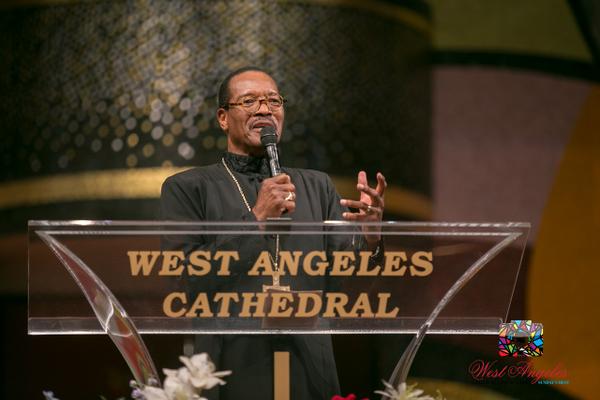



I recently had the privilege of honoring one of America’s great pastors - a wonderful co-worker in ministry, a powerful force for good in the city of Los Angeles, and dear friend of mine. Bishop Charles Blake has pastored West Angeles Church in the heart of L.A. for forty-six years! That’s what you call “putting down roots” in a congregation and city. There aren’t many pastors who’ve cared for one congregation for that long. (One of my 6 mentors served his church in Dallas for 50 years.)
A big reason why many churches are plateaued and declining is because they change leaders every few years. There’s no way a church can grow healthy and strong if the office of the pastor has a revolving door. What would happen to a family that got a new daddy every 3 or 4 years? The children would have massive trust issues from not knowing who they count on, and all kinds of emotional wounds, including a fear of abandonment, poor self-esteem, and a suspicious attitude in every relationships. When so many pastors move around every few years (or they are forced to move by their denomination) it’s no wonder many churches are weakened by conflict, cliques, gossip, and distrust.
Usually in a church, the first year for a new pastor is the ”honeymoon” – everybody tries to get along and be happy. (Actually it’s not really a honeymoon, just suspended judgment!) The second year for new pastor, he starts to be criticized by people who don’t like his new direction for the church. The seven last words of the church are “We've never done it that way before!”
By the third or fourth year, somebody has to leave... either the pastor leaves, or those who are dissatisfied leave. From 35 years of coaching pastors and mediating church conflicts between members and their pastors, I’ve seen this over and over: When the pastor leaves, the problems stay. (They’re left for the next poor pastor to deal with.) But if the pastor stays, the problems leave. Either the problem is eventually solved, or the problem-creators move to another church. It’s sad that one study showed that the average pastor gives up and leaves because of 7 vocal critics.
When I planted Saddleback Church 35 years ago, I made a public commitment to our first members to stay as their pastor – through thick and thin – for 40 years. God willing, I intend to keep that commitment. It has not always been easy. I’ve wanted to resign on many Monday mornings. But like my marriage vow, I made a commitment to God that I do not take lightly.
Looking back, and then looking at all the good Saddleback has accomplished around the world, I’m grateful that I never gave up on my calling or the vision God gave me, or the precious people he placed under my care and leadership (1 Peter 5:1-3, Heb. 13:17). But I’m even more grateful that God never gave up on me, because I’m not the same man I was when Kay and I started the church 35 years ago. While the church was growing, God was growing me.
God is a systematic God. He created the solar system. The Animal Kingdom and Plant Kingdom are systems in a finely balanced environment. Your body is a collection of systems – digestive, respiratory, nervous, skeletal , circulatory, and other systems. Just as God designed your body to function around nine systems, the Body of Christ, the church, is designed to function around 5 biblical systems.
While pastoring Saddleback, it’s also been my privilege to assist and train other pastors in setting up the biblical systems of fellowship, worship, discipleship, service, and evangelism. At last count, I've served over 440,000 pastors from 164 countries. In every training program, I’ve told pastors the same thing: I can teach you the personal character (Psalm 78:72), the biblical purposes (Matt. 22:37-40 & Matt. 28:19-20), the New Testament structure (Acts 5:42), and the necessary skills (Eccl 10:10), that will grow a congregation, but I cannot teach you how to do it quickly!
To grow something strong and healthy takes time. When God wants to make a mushroom he takes 6 hours but when he wants to make an oak tree, he takes 60 years. So here’s the question: Do you want your church to be a mushroom or an oak tree? If you want it to last, you can’t grow it fast. True discipleship takes time.
One thing that I’m not a fan of are published lists of the "fastest growing churches.” They reinforce short-term thinking. But strength, not speed, is what matters. No one cares how long it took Michelangelo to paint the Sistine Chapel. What matters is its lasting beauty. Fast-growing churches don’t impress me. I could teach you a dozen ways to attract a crowd fast, but a crowd is not a church!
What impresses me are the number of disciples in small group fellowship, active with the spiritual habits, serving in ministry, and being sent out on mission. You judge the strength of a church not by its seating capacity but by its sending capacity. Yes, we’ve baptized over 42,000 adult believers, but just as importantly, Saddleback Church has over 40,000 studying the Bible each week in small groups, over 27,000 members serving in what we call bi-vocational ministries, and has sent 24,869 of our member to serve overseas in 197 countries. You can’t do any of that quickly!
You have to stay put and be patient. There are instant crowds, but no instant churches, and attendance is only one of a dozen vital signs of a healthy congregation.
There are too many advantages and benefits of staying in one place for ministry than I have space to mention in this post. But here’s one benefit I’ve witnessed over and over: When you lead with love and integrity, your ministry gets better every year. But if you don’t lead with love and integrity, it gets worse and more difficult every year. You can pretend to love people for a few years, but you can’t fake love for 35 years! The people figure out if you are legit, because there is never a moment when they aren’t watching you, and testing your credibility.
If you are a leader, people are constantly doing a “credit check” on you before they invest themselves. People want to know 1) Does my pastor love me? 2) Does he practice what he preaches? and 3) Does he lead by example, making the first sacrifice? The Good Shepherd lays down his life for his sheep. And if a pastor does that humbly and consistently year after year after year, the people will follow you anywhere... even if it means charging hell with squirt guns!
I don’t have space to explain the background and reasons, but one time the members of Saddleback church voted unanimously by anonymous ballot to purchase a $13 million dollar piece of property – without knowing the purchase price, because I had said two words: “Trust me.” Of course I would not have even attempted to suggest that in the early years of Saddleback. But after a 20 year track record of love, sacrifice, wise decisions, and a willingness to own up to my mistakes and weaknesses, I had earned their trust.
Bishop Charles Blake is that kind of leader. For 48 years he has been able to impact Los Angeles in ways no other pastor I know has because he stayed put! In 1 Timothy 1:12, Paul said “I thank God for putting me into the ministry.” Ministry is received, not achieved. It is a gift of God’s grace. And if God puts you into ministry, then must stay put, until he announces other plans for you!
And if you’re a pastor who could use some fresh perspective and encouraging coaching for your church, this November 10-13, I’m going to teach an invitation-only, four-day intensive called New Hope For Your Church. I’m going to share everything I’ve learned about pastoring since I wrote The Purpose Driven Church twenty years ago. I’ll share the mistakes I made (so you can avoid them), the lessons I’ve learned the hard way, and most important of all, the biblical steps to revitalizing a plateaued or declining church.
And if you’re a pastor who could use some fresh perspective and encouraging coaching for your church, this November 10-13, I’m going to teach an invitation-only, four-day intensive called New Hope For Your Church. I’m going to share everything I’ve learned about pastoring since I wrote The Purpose Driven Church twenty years ago. I’ll share the mistakes I made (so you can avoid them), the lessons I’ve learned the hard way, and most important of all, the biblical steps to revitalizing a plateaued or declining church.
Recent Articles

Lead with Mercy When People Are Hurting
Jesus’ ministry was all about mercy. He showed mercy everywhere he went.If you want to know what mercy-shaped leadership looks like, watch how Jesus meets people in three moments pastors face all the time: shame, disappointment, and death. Luke 1:78 says, “A new day will dawn on us from above because our God is loving and merciful” (GW). Because Jesus is merciful, you can’t just talk about mercy. Mercy has to shape the way you shepherd.Watch how Jesus treats the ashamed, how he answers disappointment, and how he speaks hope when death is close. Then go do the same in your ministry.1) When people mess up, protect their dignity and refuse to throw stones.In John 8, a woman is dragged into public shame. The religious leaders are not trying to restore her. They are trying to use her to trap Jesus.I love what Jesus does first. He slows the whole moment down, protects her dignity, and refuses to let her become a spectacle.When they keep on questioning him, he straightens up and says to them, “Let any one of you who is without sin be the first to throw a stone at her” (John 8:7 NIV). One by one, the accusers walk away. After they all are gone, he assures her he doesn’t condemn her and then says, “Go now and leave your life of sin” (John 8:11 NIV).Pastor, that is where mercy begins. Jesus refuses to shame her, but he does call her to change.That is the kind of mercy people trust.It tells the truth without public humiliation.It makes room for repentance.It offers a next step instead of a permanent label.And if you are honest, you need that mercy too. When you have stumbled, overreacted, or said something you wish you could take back, Jesus is not looking for a chance to shame you. He is ready to restore you.Jesus says, “I have come to save the world and not to judge it” (John 12:47 NLT). If you lead like a judge, people will hide. If you lead like a shepherd who has received mercy, people can finally be honest.2) When disappointment settles in, don’t let it harden you.A lot of anger is really disappointment that has been sitting too long. Pastors know that feeling.In John 5, a man has been lying by a pool for 38 years. That is a long time to live with disappointment. So when Jesus asks, “Do you want to get well?” (John 5:6 NIV), the man does not really answer the question. He explains why nothing has changed: Somebody else always gets there first.Let disappointment sit long enough, and blame starts to feel normal. You stop expecting much. The heart gets hard.Jesus does not shame the man for that. He answers him with mercy: “Get up! Pick up your mat and walk” (John 5:8 NIV). Mercy gives him something to do, and the man walks.Pastor, sometimes the impossible is not a dramatic turnaround by Sunday. Sometimes it is the quieter miracle of staying soft when you have been let down, obeying God in the next small step, and refusing to let disappointment train you into cynicism.God’s mercy makes room for hope again.3) When death is close, offer people more than comfort; offer them mercy.Sooner or later, every pastor walks into a room where eternity is no longer theoretical: a hospital room, a graveside, or a conversation where death is suddenly close enough to touch.In Luke 23, two criminals hang beside Jesus. One mocks him. The other admits the truth: “We are punished justly, for we are getting what our deeds deserve. But this man has done nothing wrong” (Luke 23:41 NIV). Then he says, “Jesus, remember me when you come into your kingdom” (Luke 23:42 NIV).And Jesus answers, “Truly I tell you, today you will be with me in paradise” (Luke 23:43 NIV).That is more than comfort. It is mercy.It reminds you that the people in front of you do not mainly need better religious performance. They need a Savior, and so do you.So, pastor, carry mercy into the rooms waiting for you this week.Carry it into the hard conversation with the person who failed, into the long disappointment that is tempting you toward cynicism, and into the hospital room, the funeral, and the private places where fear gets loud.Mercy cannot simply be something you preach about. It has to shape the way you care for those you lead.Isaiah 30:18 says, “The LORD wants to show his mercy to you. He wants to rise and comfort you” (NCV). That is God’s word to your people.It is also God’s word to you.

Focus on What Lasts
Your ministry will shrink to whatever is right in front of your face.Let that sink in.If you only look at this week’s pressure, you’ll end up building your schedule, your budget, and your emotional energy around what is urgent, not what is eternal.But God is looking for leaders with foresight. That’s what happens when you lead in light of eternity.Set your mind higher than the moment.Colossians 3:2 says, “Set your mind on things that are above, not on things that are on earth” (ESV). The Living Bible paraphrase puts it like this: “Let heaven fill your thoughts; don’t spend your time worrying about things down here.”There’s a saying that goes, “They’re so heavenly minded they’re no earthly good.” That can be true of some people. But I also know people who are so earthly minded they’re no heavenly good.I think the message the church needs to hear is simple: There is more to life than just here and now. Most people are only interested in what Christ can do for them today, this week, and in this season.But the Bible keeps calling us up and forward: “Do not store up for yourselves treasures on earth. . . . But store up for yourselves treasures in heaven. . . . For where your treasure is, there your heart will be also” (Matthew 6:19-21 NIV).If you want foresight, build on what lasts.Pastor, I want you to get serious about answering one question for your ministry: What is going to last?These four things will still matter when everything else disappears.1. God’s Word will last.God’s Word is going to last. Jesus said, “Heaven and earth will pass away but my words will never pass away” (Matthew 24:35 NIV). So I build my life—and I want you to build your ministry—on God’s Word.2. Faith, hope, and love will last.The Bible tells us faith, hope, and love are going to last. So build your life on them.3. People will last.People are going to last in one of two places: heaven or hell. Where I spend my time now may determine where they spend their eternity.4. Prayer will last.Prayer is going to last. Revelation 5:8 says the prayers of the saints are stored up in vials in heaven. God hears prayer. There are prayers being answered today that were prayed a hundred years ago.Don’t pour your best into what will burn up.Here is the tragedy I’ve seen over and over: Most Christians spend their time, money, energy, and effort on things that are going to burn up at the judgment.Cars are not evil. Nice clothes are not evil. The issue is what happens when the present becomes the main thing.I have seen it so many times: People get preoccupied with “right now,” and they end up getting set on a shelf spiritually.A focused life is a finished life.I really believe that Jesus, since he was perfect, never wasted a second. He knew when to relax. He knew when to have fun. He knew when to be serious. He was perfectly balanced. He knew when to be intense, and he knew when to lighten up.When Jesus was 12 years old, his first recorded statement was, “I must be about my Father’s business” (Luke 2:49 KJV). When Jesus died on the cross, some of his last words were, “It is finished!” (John 19:30 NKJV). Not “I’m finished,” but “It is finished.”What was finished? The Father’s business. Those are bookends on a successful life.

7 Ways to Prevent Staff Burnout
One of my life verses is Proverbs 14:30, “A relaxed attitude lengthens a man’s life” (TLB). I always think about that verse as it relates to the people I lead. Ministry carries eternal implications. We need those we lead to last in ministry. We need to make sure they don’t burn out. That’s why I’ve always encouraged what I call relaxed concern. That sounds like an oxymoron, but it’s important to the longevity of your ministry team. Relaxed concern means we realize that heaven and hell hang in the balance of what we do, but we also know we can’t live tightly wound all the time. The quickest way to burn out your staff is to never relax. I’ve seen it happen in hundreds of churches. I don’t want that to happen to your church. It’s absolutely critical that your team learns to develop a relaxed attitude so ministry doesn’t drain their energy unnecessarily. Over four decades of ministry at Saddleback, these seven practices helped to limit burnout.Don’t expect every staff member to work at the same energy level all the time. It’s unrealistic. We’re all made differently. You can’t expect people to give more than they have. Some people are racehorses. Others are turtles. Most people fall somewhere in between. Spend the time to learn how the people on your time work so you can adjust accordingly. Be aware of external drains on energy and compensate. When team members are in the midst of a major life event, such as an illness, personal crisis, or adding a new child to the family, it’ll inevitably drain their capacity. You need to be aware of those drains so you can compensate in other ways. Expecting people to put in the same amount of energy regardless of what’s going on in their lives isn’t realistic.Plan your year according to energy cycles. At Saddleback, we often organized our calendar around two primary campaigns—one in the spring and one in the fall. Those were intense periods of work for our staff, but we didn’t try to keep up that pace for the entire year. Everyone needs breaks (including the pastor!). Plan those cycles into your calendar so your staff knows what to expect.Allow flexible schedules. I was never interested in the time people put in at the office. I was interested in productivity. That’s why I always allowed people to go home when they got their jobs done. Also, when people had to work late, I compensated for that by letting them take some time off the next day.Work smarter, not harder. The Bible tells us, “A dull ax means harder work. Being wise will make it easier” (Ecclesiastes 10:10 NCV). Don’t let your team settle for working with a dull ax. Encourage them to develop their skills, so they are constantly becoming more efficient in their ministries. As a leader, give your team resources to learn and grow in their fields.Focus on the long haul. You’ve heard it said that Rome wasn’t built in a day. That’s also true of ministries. Long-term results, rather than short-term gains, are what we need to focus on. Part of that long-term focus is building long-term relationships. At Saddleback, I always used the Billy Graham team as a model. They were together for decades, and it helped their work. When you’ve been together with people for 35 years, ego isn’t a problem. You can read the moods of others. Make the work fun. The most successful people are those who get paid for doing what they like to do anyway. You’ll wear people out if their work is drudgery. Plan excursions and encourage your team to enjoy what they do. We all want our ministry teams to last, not just for the sake of our ministries, but for their own flourishing. With these seven principles, you’ll help your leaders endure.

7 ways to move from research to reflection in sermon prep
Pastor, one of the easiest ways to preach a thin sermon is to rush from study to outline to delivery.You may handle the text accurately and still end up with a message that feels like it came from your notes instead of your heart.Sermon prep needs more than research. It also needs reflection.So what does that look like in practice?1. Research the text honestly.Research is the technical side of sermon preparation. It is the serious study of the text. When you research, you ask two questions: What does it say? and What does it mean?That means doing the hard work of studying the text’s background, grammar, literary form, theology, and context, then using your tools carefully and handling the passage honestly.Good research keeps you from forcing your own ideas into the text.And, pastor, it also keeps you humble. You do not have to impress people with Greek or act like you found something every careful translator somehow missed. Use the tools. Learn from good scholars. Stay in context.2. Reflect on the text patiently.After research comes reflection. This is the devotional side of sermon prep, where you stop treating the passage only as something to explain and start letting God use it on you.You read over what you have gathered. You think on it again and again. You ask, “God, what are you saying to me?”Research studies with the mind. Reflection listens with the heart. If the message has not gotten into you, it will be hard for it to get through you.3. Meditate until the truth sinks in.The Bible’s word for this kind of reflection is meditation. Meditation is not emptying your mind. Instead, it is focused thought.It is staying with God’s truth long enough for it to feed you.A good picture is rumination. A cow chews its cud over and over to get all the nourishment out of it. In the same way, you keep returning to the truth, turning it over, and asking how it applies to your life, your church, and your people.If you know how to worry, you already know how to meditate. Worry is turning a fear over and over in your mind. Meditation is turning over the truth of God. Same habit. Different focus.4. Give reflection more time than is comfortable.You cannot rush reflection.That is not something you squeeze in on Saturday afternoon because Sunday is coming.Truth needs time to settle in you. It needs time to simmer.One of the biggest mistakes pastors make is starting too late in the week. Pressure kills creativity. But when you give the message time, your thinking gets clearer and the sermon gets warmer. Some of your best insights will come after rest, not strain.5. Carry the message with you through the week.Reflection does not only happen at your desk.It happens in your quiet time, in the car, in the shower, on a walk, while doing chores, and in all the ordinary places where your mind can return to the passage.You do the study, gather the material, and then carry it with you. That is often when the truth starts connecting in deeper ways. Some of the best ideas for the sermon may come when you are away from church, not buried deeper in it.6. Record what God brings to mind.When insights come, capture them. Write them down. Dictate them. Scribble them on paper if you need to.Do not assume you will remember them later, because you probably won’t. Part of reflection is paying attention when God begins to press something clear, sharp, and useful into your mind.7. Preach what has first searched you.If you skip research, you can mishandle the text. But if you skip reflection, you may still preach something true without preaching something that has first searched your own heart.Sermons rarely go deeper in others than they have gone in the preacher.So do the study. Do the exegesis. Use the tools.Then slow down long enough for God to work the message into you.That is how a sermon becomes more than informed. It becomes personal. And that’s when it’s able to help your people.
At Pastors.com, our passion is to have healthy pastors leading healthy churches for the global glory of God.
Categories
Topics
More Resources
Customer Service


© 2025 Pastors.com All rights reserved.
PO Box 80448, Rancho Santa Margarita, CA 92688